Last Updated: March 5, 2026
You might notice something has shifted as you move into your mid 40s and beyond. Maybe your mind is racing when it never used to, or you find yourself feeling jittery, on edge, or overwhelmed by things you could previously brush off. Perhaps you're waking up in the morning with your heart pounding, your thoughts full of worry, or you're snapping at loved ones because you just feel irritable and unsettled.
If this sounds familiar, you're not alone, and what you're experiencing is real. The good news? There's a reason behind it, one rooted in what's happening inside your body as you move through perimenopause or enter menopause, which occurs for women at 51, on average. Understanding what's happening gives you more control, and with the right support, relief is absolutely possible.
What Does Perimenopause Anxiety Feel Like?
Anxiety during perimenopause doesn't always look the way you'd expect. Many women picture anxiety as worry or panic: but during perimenopause, the feelings can be more subtle, and therefore harder to recognize for what they are. You might experience a combination of emotional and physical signs that seem to come out of nowhere.
Emotional and mental signs:
- Feeling restless or uneasy, like your brain won't switch off
- Worries or negative thoughts that seem out of proportion or harder to dismiss
- Irritability or feeling short-tempered without your usual triggers
- A sense of dread, or "what if" thoughts that invade your peace
- Trouble concentrating or mental fog that makes you more anxious
Physical and physiological signs:
- Racing heart, tight chest, or palpitations that feel like panic without an obvious cause
- Sweating, flushing, or hot flashes that come alongside or trigger anxious feelings
- Night sweats or disrupted sleep that leave you exhausted and more vulnerable to anxiety
- Stomach upset, dizziness, or tension in your body, your nervous system feels like it's "on" more often
- Feeling unanchored or like your emotional responses are heightened (things that used to roll off you now linger)
Why this may be confusing: Many of these symptoms overlap with stress, aging, or other life changes, making them easy to dismiss. You might think, "I'm just stressed with work," or "I'm losing control." But here's the key: during perimenopause, your hormones shift in ways that can directly trigger anxiety. Recognizing that link is the first step toward managing it.
Why Perimenopause Anxiety Is Often Worst at Night
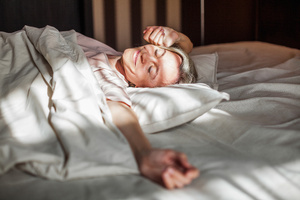
For many women, perimenopause anxiety has a distinctly nocturnal quality: the racing thoughts that arrive at 3am, the heart pounding that jolts you awake, the inability to get back to sleep once you're up. This isn't in your head. Research confirms that nighttime is where perimenopausal anxiety and hormonal disruption collide most intensely.
A peer-reviewed study found that sleep disturbances affect 40–60% of perimenopausal women, with nighttime awakenings being the single most common complaint. The research identified anxiety, rumination, and generalized hyperarousal as core features of perimenopausal insomnia. It also found that anxiety symptoms were specifically linked to longer time to fall asleep and significantly lower sleep efficiency.
Hot flashes play a direct role here too. The same research found that women with moderate-to-severe hot flashes are nearly three times more likely to report frequent nocturnal awakenings, and that an awakening occurred coincident with 69% of objectively recorded hot flash events. In other words, most nocturnal hot flashes don't just cause discomfort: they directly interrupt sleep, often triggering a surge of alertness and anxiety that can last for hours.
The result is a brutal feedback loop: hot flashes wake you up, your nervous system floods with adrenaline, anxiety spikes, and now you can't get back to sleep. Poor sleep then makes your anxiety worse the next day, which makes your nervous system more reactive that night. Repeat.
This is why so many perimenopausal women describe feeling fine during the day but falling apart at night: and why waking up exhausted, wired, and anxious has become their new normal. It's not a weakness or worry. It's biology.
Sidebar: Anxiety vs. Panic | What's the Difference?
Anxiety: A sustained sense of unease, worry, or hyper-vigilance, often with physical symptoms like a racing heart, tightness, or restlessness.
Panic: A sudden surge of intense fear or terror with strong physical symptoms (heart pounding, sweating, trembling) and a feeling of losing control.
During perimenopause, you may experience either or both. What matters is recognizing that your body is reacting, and it's not your fault.
Why Perimenopause Messes With Your Mood
Most women are caught off guard by perimenopausal anxiety because it doesn't look the way they expect. This isn't a mental health crisis or a personality change, it's your hormones destabilizing the very systems your brain uses to stay calm. Here's what's actually happening.
The Hormone–Brain Connection
Your hormones don't just affect reproduction, they're deeply involved in mood regulation and stress response. During perimenopause, three key players shift in ways that directly fuel anxiety.
Estrogen: Your Brain's Mood Stabilizer
Estrogen supports neurotransmitters like serotonin and dopamine, which help you feel calm, happy, and confident. During perimenopause, estrogen levels fluctuate dramatically, rising and falling erratically before they eventually decline. The unpredictability is actually the problem: your brain struggles to adapt to constant hormonal ups and downs, leaving your mood regulation system unstable and making you more reactive to stress.
Progesterone: Your Natural Calming Agent
Progesterone is one of the first hormones to decline during perimenopause. It has a calming effect in the brain through its metabolite allopregnanolone, which acts on the GABA system, your body's main calming neurotransmitter. As progesterone drops, that calming influence weakens. Combined with fluctuating estrogen, the result is a brain that's more reactive, more sensitized to stress, and less able to quiet itself.
Cortisol and the Stress Loop
Estrogen also helps regulate cortisol, your body's primary stress hormone. When estrogen fluctuates and drops, cortisol spikes more easily, keeping your nervous system on alert longer than it used to. Add disrupted sleep from hot flashes or night sweats, and you create a feedback loop: poor sleep leads to higher stress reactivity, which increases anxiety, which worsens sleep. This isn't about you failing to manage stress, it's your body's changing biology altering how it responds to stress.
Why some women are hit harder than others
Biology doesn't affect everyone equally, and research helps explain why. A peer-reviewed study found that trait anxiety and anxiety sensitivity together explained 56–66% of the variation in perimenopausal distress across 660 women.
In other words: women who have always tended toward anxiety, or who fear their own anxiety symptoms, experience perimenopause significantly more intensely. This isn't weakness, it's a documented vulnerability. Importantly, the study found that as women move closer to menopause (ages 46–52), anxiety sensitivity (particularly fear of losing mental control) becomes the strongest predictor of distress, more so than baseline trait anxiety. If perimenopause feels disproportionately destabilizing to you, this research helps explain why, and it points directly toward therapies like CBT that specifically target anxiety sensitivity.
Women are 1.56–1.61 times more likely to develop an anxiety disorder during perimenopause compared to premenopause, and up to 5 times more likely to develop a mood disorder. But the risk isn't evenly distributed. The review identified a cluster of psychosocial factors that significantly raise vulnerability: a personal or family history of depression, trauma and adverse childhood experiences, chronic stress, and high neuroticism. On the protective side, strong social support and resiliency characteristics were associated with fewer symptoms. This is a reminder that perimenopause doesn't happen in a vacuum. What you've carried into midlife shapes how your body and mind respond to the transition.
How Long Does Perimenopause Anxiety Last?
This is one of the most common questions women ask. The honest answer is: it varies, and it's longer than most people expect.
Perimenopause itself typically lasts 4–7 years, though it can extend up to 14 years in some women. Most women begin the transition between ages 45 and 47, with menopause (the official end point, confirmed after 12 months without a period) occurring at an average age of 51–52. Anxiety, like most perimenopausal symptoms, tends to track with the hormonal turbulence of this window, not a fixed clock.
It's useful to think in two phases:
Early perimenopause begins with occasional menstrual irregularity and can last several years. Hormone fluctuations are present but less dramatic. For some women, anxiety starts to creep in here.
Late perimenopause, defined as 60 or more days without a period, is typically when symptoms intensify. This stage usually lasts 1–2 years and is when anxiety, hot flashes, and sleep disruption tend to peak, because hormone levels are swinging most erratically before they eventually settle.
What happens after menopause?
Menopause itself is technically a single moment, confirmed after 12 consecutive months without a period. What follows is post-menopause, which is the rest of a woman's life. But symptoms don't simply stop when periods do. Research shows that menopausal symptoms can persist for 10 years or more after the transition, with hot flashes alone lasting an average of 7.5 years.
Anxiety often follows a similar pattern. For many women it does ease once hormones stabilize at their post-menopausal baseline, the erratic fluctuations that keep the brain's stress response on high alert are no longer in play. But for others, particularly those who went untreated or whose sleep became chronically disrupted during perimenopause, anxiety can linger well into the post-menopausal years.
When you add it all up: perimenopause (4–7 years) plus symptoms that can trail into post-menopause (another 7–10 years) means a woman could spend well over a decade dealing with hormonal anxiety without ever being told why, or that there's anything she can do about it.
The bottom line: you don't have to white-knuckle your way through this. The 4–7 year perimenopause timeline and the decade-plus of potential symptoms reflect the untreated course. For many women, the right hormonal support can significantly reduce both the intensity and duration of anxiety symptoms. You deserve to feel like yourself during this transition, not just hope you'll feel better on the other side of it.
Finding Relief: Treatments That Target the Cause, Not Just the Symptoms
Now that you understand why anxiety may be showing up during perimenopause, let's explore what you can do, especially treatments that address the underlying hormonal changes.
A. Hormone Replacement Therapy (HRT)
Since your anxiety may be rooted in perimenopausal hormone fluctuations, one of the most direct approaches is improving hormonal balance through HRT. It's worth noting that HRT is used less commonly in perimenopause than after menopause, and the approach needs to be calibrated carefully for women who are still cycling, but it is an option worth discussing with a provider who specializes in this transition.
What is HRT? Hormone Replacement Therapy means supplementing your body with hormones like estrogen and progesterone (and sometimes testosterone) under careful medical guidance. Some clinical organizations prefer the term Menopause Hormone Therapy, but we use HRT as that's what's more commonly used.
How HRT may help with perimenopause anxiety:
- Stabilizes mood regulation: By smoothing out estrogen fluctuations, HRT can support the neurotransmitters that regulate mood.
- Enhances calm: Progesterone may enhance the calming GABA pathways in your brain, helping you feel less on edge.
- Breaks the anxiety cycle: HRT can improve sleep, reduce hot flashes and night sweats, and lower stress reactivity, indirectly calming your nervous system.
What to consider: Every woman's medical history and stage of perimenopause is different. Determining whether you're a good candidate for HRT, what formulation is right for you, and how it will be delivered (pill, patch, gel) requires a careful, individualized conversation with your provider. Regular monitoring and follow-up are essential.
B. Cognitive and Behavioral Therapies
Even when HRT is part of your treatment plan, therapy is a powerful tool for managing anxiety in real time.
Cognitive-Behavioral Therapy (CBT) CBT teaches you to recognize anxious thought patterns ("What if..." "I can't handle this...") and gently reframe them. Since hormonal changes during perimenopause may amplify your emotional reactivity, CBT gives you tools to respond thoughtfully rather than react automatically.
Think of it this way: HRT addresses the biological root; therapy addresses your mental responses. Together, they're more powerful.
Mindfulness and Stress Reduction (MBSR) Research shows that mindfulness practices help women with perimenopausal anxiety. One study found that MBSR significantly improved anxiety symptoms and even influenced hormone and serotonin levels in perimenopausal women (1). These practices help calm your nervous system, reduce the vigilant mode your body may be stuck in, and increase your resilience to stress.
C. Lifestyle Supports
Don't underestimate daily habits, especially when your hormones are already challenging your equilibrium.
- Prioritize sleep: When you're sleep-deprived, your brain struggles to regulate emotions, your nervous system becomes more reactive, and anxiety climbs.
- Move gently: Walking, yoga, and stretching stimulate mood-supporting hormones and calm your nervous system.
- Eat steadily: Regular meals with good protein, limited caffeine and sugar spikes, and magnesium-rich foods support emotional balance.
- Manage stress: Try mindfulness, breathing exercises, journaling, or simply making time for rest.
- Create routine: Because your hormones may be fluctuating, lifestyle anchors (regular sleep, consistent movement, calming evening routines) help stabilize your nervous system.
When to Seek Help
Reach out to a healthcare provider if your anxiety:
- Is new or significantly worse than before
- Significantly interferes with your sleep, work, relationships, or daily life
- Comes with physical symptoms like racing heart, palpitations, or chest tightness that concern you
- Appears alongside other changes like hot flashes, night sweats, mood swings, or sleep disruption
Seek support earlier if you have a history of anxiety. Research shows that women with pre-existing trait anxiety or anxiety sensitivity are at significantly higher risk for severe perimenopausal distress. If this describes you, don't wait for symptoms to become overwhelming. Getting support at the first signs of the transition can make a meaningful difference in how you experience it.
Your life history matters too. A 2024 narrative review found that chronic stress, trauma, and adverse childhood experiences significantly increase the risk of anxiety and mood disorders during perimenopause. While strong social support and resiliency act as meaningful protective factors. If you're carrying a heavy load going into this transition, that's not something to push through alone. It's something to address with professional support.
References
Baker, F. C., Lampio, L., Saaresranta, T., & Polo-Kantola, P. (2018). Sleep and sleep disorders in the menopausal transition. Sleep Medicine Clinics, 13(3), 443–456. https://pmc.ncbi.nlm.nih.gov/articles/PMC6092036/
McElhany, K., Aggarwal, S., Wood, G., & Beauchamp, J. (2024). Protective and harmful social and psychological factors associated with mood and anxiety disorders in perimenopausal women: A narrative review. Maturitas, 187, 108118. https://www.sciencedirect.com/science/article/abs/pii/S0378512224002135
Muslic, L., & Jokic-Begic, N. (2016). The experience of perimenopausal distress: Examining the role of anxiety and anxiety sensitivity. Journal of Psychosomatic Obstetrics & Gynecology, 37(1), 26–33. https://www.researchgate.net/profile/Natasa-Jokic-Begic/publication/292342970_The_experience_of_perimenopausal_distress_Examining_the_role_of_anxiety_and_anxiety_sensitivity/links/624994f07931cc7ccf124082/The-experience-of-perimenopausal-distress-Examining-the-role-of-anxiety-and-anxiety-sensitivity.pdf