
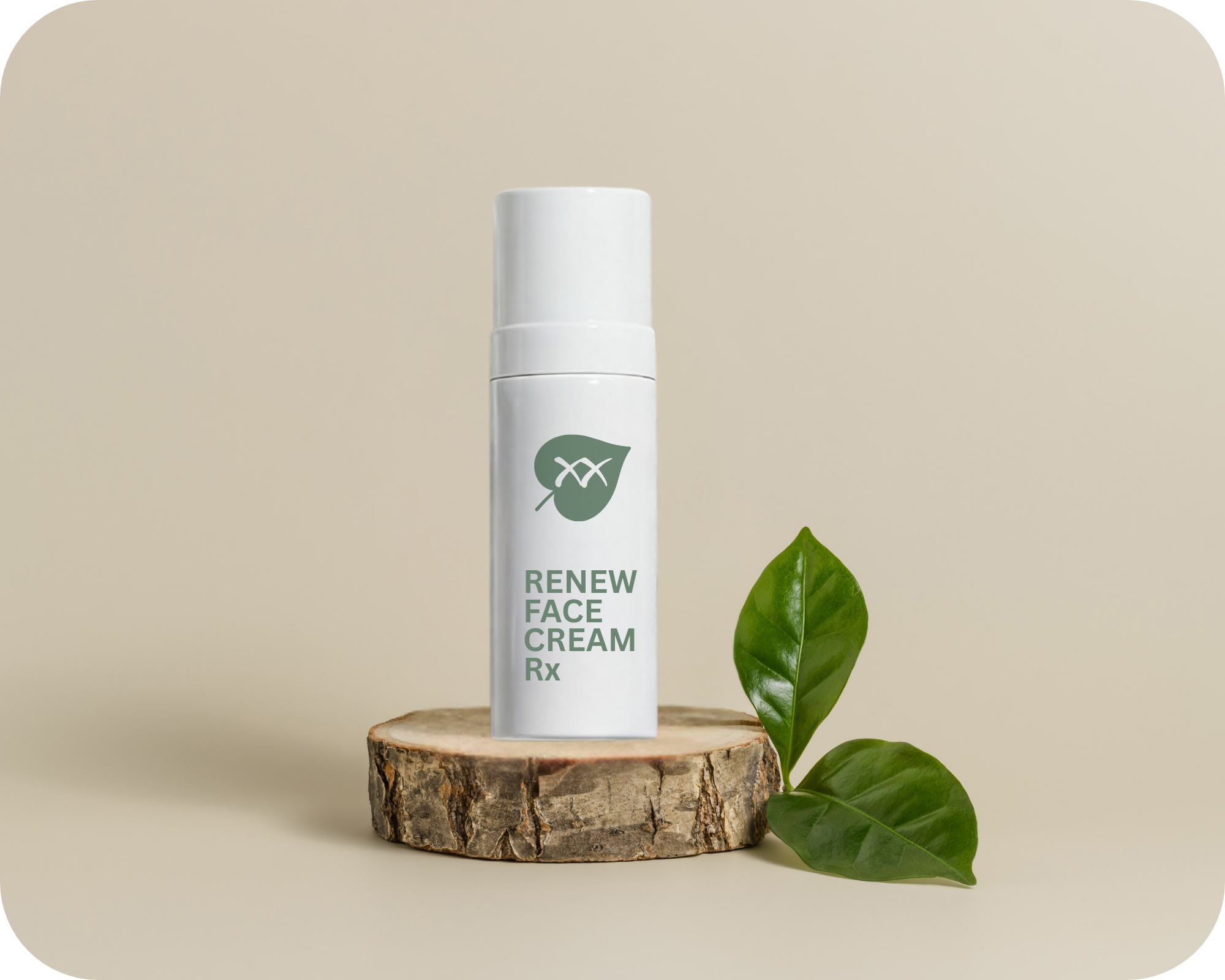
Estriol Renew Face Cream
$130 for 3-month supply
This innovative anti-aging cream combines the gentle benefits of estriol, a natural estrogen, with the proven skin-renewing power of tretinoin to address the specific skincare needs of menopausal women. As hormonal changes during perimenopause and menopause lead to decreased collagen production, thinner skin, and increased fine lines, this dual-action formula works to restore skin's youthful appearance from multiple angles.
The estriol helps improve skin thickness, hydration, and elasticity while supporting natural collagen production. Tretinoin accelerates cell turnover to smooth fine lines and improve overall skin texture.
Compounded drugs are permitted to be prescribed under federal law but are not FDA-approved. For more information on side effects and other safety information, see full important safety information.

Connect one-on-one with a clinician licensed in your state. Your first visit is a private video consultation.
Book nowExplore the research, understand your options, and feel confident about finding care that's right for you.
Learn more
FAQs
The short answer is that they're solving different problems. Most over-the-counter anti-aging products, even well-marketed, expensive ones, are designed to improve how skin looks and feels at the surface. They work with moisturizing ingredients, peptides, antioxidants, and low-concentration retinol to hydrate, temporarily plump, and slow surface-level deterioration.
Estriol face cream is a prescription product because it contains ingredients that can actually engage the estrogen receptors in your skin's deeper layers and restart the processes that have slowed down: collagen production, moisture retention, skin thickness, and cellular renewal. Tretinoin is similarly a prescription retinoid that is categorically more potent than any over-the-counter retinol. It's not a stronger version of the same thing, but a fundamentally different mechanism operating at a clinical level.
If your skin changes are hormonally driven, and for most women in perimenopause and menopause, they are, a drugstore product can support and maintain your skin, but it cannot restore what estrogen loss has taken. That's what this cream is designed to address.
Apply the cream at night — tretinoin breaks down in sunlight, so nighttime isn't just a preference, it's how the product is designed to work. Cleanse first, apply a pea-sized amount to your full face, and follow with a gentle moisturizer if needed. Every morning, apply a broad-spectrum SPF 30 or higher without fail. Sun exposure re-triggers the pigmentation and collagen breakdown the cream is working to reverse, so SPF is essential, not optional. Avoid layering other active ingredients — exfoliating acids, other retinoids, benzoyl peroxide — on the same nights you use this cream, especially in the first few months.
Expect an adjustment period. Redness, dryness, and flaking in the first two to three weeks are normal — your skin is responding to the tretinoin's cell turnover signal, not reacting badly. If sensitivity is high, starting every other night for the first few weeks significantly reduces the chance of significant irritation. Texture improvements typically begin around weeks four to eight, with more visible changes in fine lines and firmness emerging from weeks eight to twelve onward. Collagen remodeling takes time, and results continue to build with sustained use. Consistency over several months is where the real payoff comes from.